Dairy sector takes action to tackle food waste
The Dairy Food Waste Action Plan is the Australian dairy industry’s response to the Australian Government’s goal of halving food waste by 2030.
Food waste from the dairy supply chain has previously been identified as one of the six highest Australian food waste sources.
In 2023, RMCG and our project partner Rawtec worked with Dairy Australia to deliver a Dairy Food Waste Action Plan to increase the transparency of dairy food waste across the supply chain, and provide a pathway for the industry to collaboratively tackle this waste challenge. The action plan was developed in partnership with the Australian Dairy Products Federation and Stop Food Waste Australia, with support from Dairy Manufacturers Sustainability Council members, other dairy companies and Sustainability Victoria.
The plan reflects the Australian dairy industry’s commitment to sustainable practices, including reducing waste, which is highlighted in the 2021 Australian Dairy Sustainability Framework report.
The scale of dairy food waste
Dairy is Australia’s third largest rural industry, featuring 4,420 dairy farms and 455 processing factories across the country. In 2021/22, the total annual milk production was 8,554 million litres, with 86 per cent produced in south-east Australia.
The Dairy Food Waste Account compiled as part of the action plan reports that there are currently 0.71 million tonnes of actual dairy food waste being generated across the dairy supply chain. The by-products from cheese production (e.g. whey), process wastes associated with dairy product manufacturing, and the disposal of finished product to landfill, are key waste categories.
It currently costs dairy manufacturers approximately $700m/year to manage all potential food waste, with an additional $120m of revenue lost from wasted finished products.
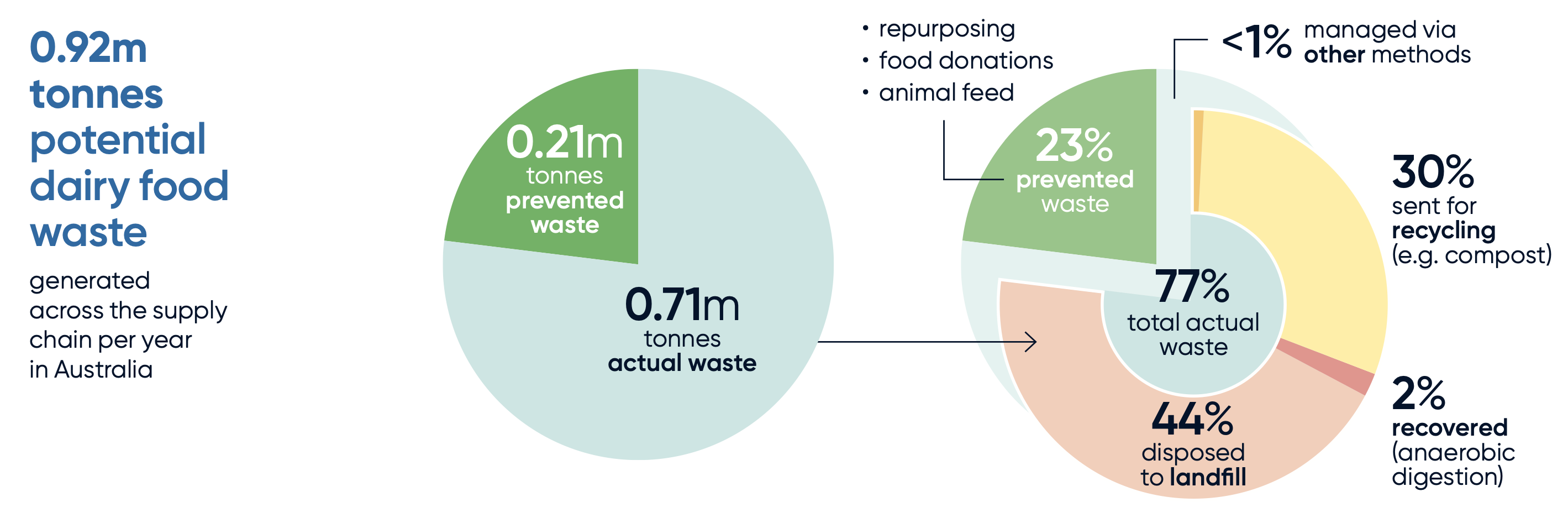
Figure 1: How much dairy food waste is there and where does it go?
The way forward
There are a range of initiatives and practices currently implemented by dairy farmers, individual dairy manufacturers, and retailers that contribute to reducing dairy food waste across the supply chain. However, further opportunities to tackle dairy food waste exist.
The action plan explores the key root causes of dairy food waste across the supply chain and outlines actions to reduce dairy food waste in manufacturing, distribution/retail and food service/households.
Access the Dairy Food Waste Action Plan here.
Find out more about our work in resource recovery.