International knowledge sharing
RMCG works beyond Australia’s borders, sharing knowledge and experience across agricultural systems, climates and cultures.
RMCG team members bring significant applied international experience. We have been engaged by partners, including the Australian Centre for International Agricultural Research (ACIAR) and the Australian Water Partnership (AWP), through fieldwork, in person collaboration, remote support and hosting international delegations in Australia.
For ACIAR, we have explored how agricultural extension, community development and sustainable land management approaches can be strengthened in different countries. This exploratory research involved fieldwork across Fiji, Indonesia, the Philippines, South Africa, Sri Lanka and Uganda, collaborating with farmers and community organisations alongside government agencies, non-government organisations (NGOs), universities and research institutes.
Projects with AWP have considered water resource planning, water quality, irrigation development, sustainable rice production, water law review and water pricing in Vietnam, Cambodia, Thailand and Indonesia.
A particular strength RMCG brings to our work beyond Australia is the practical and applied experience of our team. We understand agricultural systems, extension and engagement from working directly with farmers, industry, government and research partners, and bring a pragmatic focus to what can work in practice. Our approach is collaborative and locally grounded – working with partners to understand their priorities and context, connecting relevant people and networks, sharing experience where it is useful, and creating opportunities for genuine co-learning between practitioners, researchers, communities and institutions.
Two project examples include a knowledge exchange with female Thai farmers, and investigation of sustainable rice production for Dadahup, Kalimantan, Indonesia.
Thai farmer exchange strengthens gender inclusion and climate resilience in water management
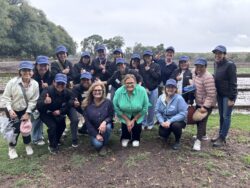
In March 2026, RMCG hosted a knowledge exchange for a delegation of female Thai farmers, in collaboration with AWP and the Thai Royal Irrigation Department. The exchange was designed to increase technical knowledge in on-farm water quality management and to promote gender inclusion in the industry.
RMCG’s local contacts and extensive knowledge of farming in Victoria and New South Wales made the exchange possible.
“Both the energy and enthusiasm of the Thai delegates and the outcomes being achieved by Australian female farmers were inspiring. This exchange has shown what a positive future there is for agriculture,” RMCG Principal Anna Kelliher said.
The impetus for change
The farmer exchange was part of a broader cooperative project between Thailand and Australia. The AWP has been working with the Royal Irrigation Department since 2022 to support the improvement of procedures and practices related to reservoir water quality management.
It was identified that a targeted opportunity for learning and exchange could strengthen farm scale water quality management. The exchange focused on sustainable agricultural practices that can reduce nutrient loading into reservoirs and waterways. Supporting female farmers in this way also promotes gender inclusion and enhances climate resilience.
Lessons
The exchange provided peer-to-peer learning with visits to leading farmers in Australia, alongside expert engagement activities with community, government leaders and technical experts. There was also peer-to-peer learning between the delegates, as they were based in all key production regions of Thailand.
Key focus areas included water and nutrient management in irrigated agriculture; innovation and digital transformation; farm to market supply change development; and climate resilient agricultural practices.
”We looked at a range of crops, both to align with what the Thai farmers manage back home and to also look at our differences, and transfer lessons from other industries,” Anna said.
Providing a targeted opportunity for learning and exchange increases the ability of the participants to adopt sustainable practices and to influence water management at the community level. The delegates were selected because they are leaders within their communities and since the exchange they have been sharing their insights with others.
See a short video about the exchange below.
Sustainable water management in rice production – Dadahup, Kalimantan, Indonesia
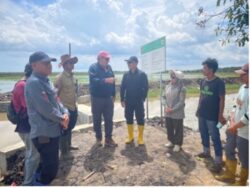
Rice-growing expert and RMCG Associate George Warne, with support from RMCG consultant Emily Davies, travelled to Kalimantan, Indonesia, to study and advise on sustainable water management for rice production in the Dadahup irrigation area.
Since severe flooding in 2021, ongoing recovery initiatives led by the Indonesian Government have focused on restoring productive capacity, strengthening water management systems, and supporting the return of sustainable agricultural livelihoods for the Dadahup area.
The RMCG work was sponsored by AWP and facilitated by the Australian Department of Agriculture, Fisheries and Forestry (DAFF), bringing together Australian agricultural expertise and local knowledge to tackle a complex question: Can Dadahup support viable and sustainable rice production?
Answering that question required more than looking at a spreadsheet or a map. We needed to understand the landscape, communities, climate risk, water management, soils, farming systems and the practical realities of producing rice in this environment. Getting into the field gave us that perspective.
Our work helped turn a complex set of conditions and questions into a clearer understanding of the opportunities and challenges for rice production at Dadahup – giving stakeholders greater confidence to consider the next steps.
The findings from the Australian expert mission have since contributed to Indonesia–Australia government discussions on the future development of Dadahup. Indonesia and Australia are working towards practical measures including a Joint Technical Working Group and an integrated water-management roadmap.
It was particularly rewarding to see the work progress from field assessment and technical advice to government-level engagement and action. This is a great example of the benefits of bringing together technical expertise, local knowledge and practical experience to help people make better decisions and confidently act on them.
It was a privilege to be part of the team and to work alongside our Indonesian colleagues and Australian partners. Thank you to AWP and DAFF for supporting the work, and to everyone who contributed their expertise and time along the way.