Berry Good future: Practice Guide for berry growers released
In partnership with Berries Australia, RMCG developed the Berry Good Practice Guide to clearly describe good practice farming for Australian berry growers. RMCG was engaged to translate industry practice into a structured, accessible framework that could support engagement with planners, regulators and supply chain stakeholders.
With funding from the Australian and NSW Government’s Storm and Flood Industry Recovery Program, the Berry Good Practice Guide was created for Australian berry growers, their advisors, industry bodies and supply chain partners. The guide brings the berry sector together to present a shared, consistent voice to planners, regulators, researchers, and the broader community about what production looks like today.
Berry consumption across the lines of strawberries, blueberries and rubus is on the rise in Australia with consumption averaging between 1-2.5kgs per capita, depending on the berry type. Berry production is a key contributor to regional economies and supply chains across the country, with Queensland, New South Wales and Victoria representing almost 80% of national production. Seasonal production of berries spans the year, with different regions complementing each other to supply both domestic and export markets.
As one of the fastest-growing sectors in agriculture, berry farming is a recent success story in Australian horticulture. Between 2013 and 2024, production value increased from $567 million to almost $1.3 billion. Blueberry exports more than doubled between 2022 and 2024 alone.
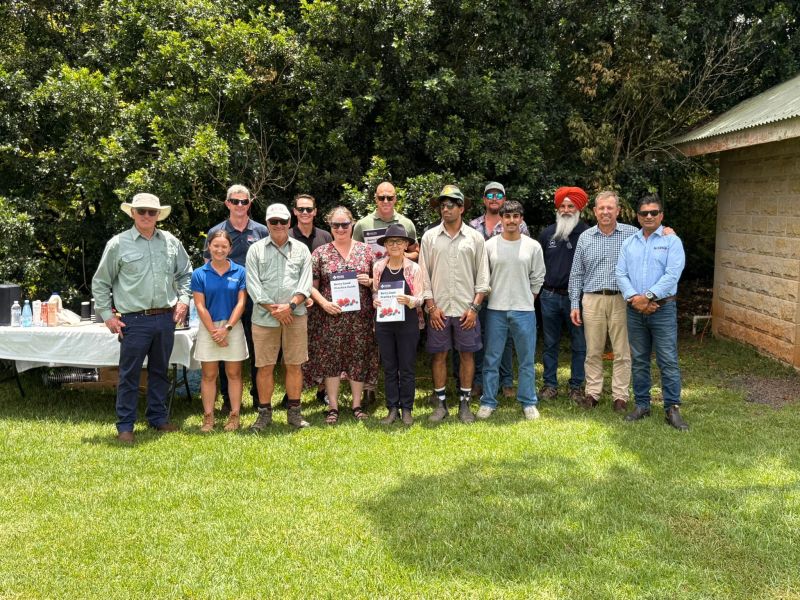
Launch of the Berry Good Practice Guide. With thanks to Berries Australia.
Not Best, but Berry Good
As berry consumption has grown, so too has public visibility of the industry. With that visibility comes higher expectations from customers, retailers, planners and the broader community about how berries are grown and how production interacts with land, water, people and neighbouring communities.
In this environment, clearly articulating what good practice looks like is critical. The Guide deliberately moves away from the language of “best practice” and instead defines the standard the industry needs to consistently demonstrate across modern Australian production systems. It establishes a credible, achievable benchmark that reflects how berry growers operate today, while supporting continuous improvement over time.
“Best practice can imply an idealised endpoint. Our intent was not to dilute ambition, but to clearly define the level of practice the industry must be able to demonstrate with confidence,” RMCG Senior Consultant, Clinton Muller said.
“This provides a consistent reference point for berry growers, as well as for planners, regulators and supply chain partners seeking to understand how the industry manages environmental, social and governance responsibilities.”

The guide reflects RMCG’s experience working across horticulture, planning and sustainability. Existing industry practice was synthesised into a structured framework, with targeted engagement used to confirm accuracy and relevance. The result is a practical reference point that is grounded in how berry growers operate today and clear to those assessing or regulating the sector.
The guide combines the knowledge of berry growers, industry leaders and sustainability experts to outline what good practice looks like in:
- Production
- Harvest and post-harvest management
- Environment and managing off-farm impacts
- Governance.
By structuring practice across these domains, the Guide provides a clear and consistent reference point for berry growers and for external stakeholders seeking to understand how modern production systems are managed. It supports practical decision-making on farm while strengthening engagement with planners, regulators and supply chain partners.
For RMCG, this project reflects our broader capability at the intersection of agriculture, planning and sustainability. We work with industries experiencing growth and increased scrutiny to articulate credible standards of practice that are practical for growers and defensible in regulatory and community contexts.
The guide is available online.