Planning for nature in a growing city: A biodiversity strategy for Greater Geelong
One of Victoria’s fastest growing Local Government Areas, Greater Geelong’s natural landscapes are cracking under the pressure of population growth and climate change. We’re leading a biodiversity strategy development to safeguard the region for generations to come.
The City of Greater Geelong lies on the traditional lands of the Wadawurrung People, who for tens of thousands of years have actively managed and cared for the diverse ecosystems of the area – including its volcanic grassland plains, hilly ranges, heathlands, forests, wetlands, and coasts, along with the animals and plants they sustain[1].
In Paleert Tjaara Dja, the Wadawurrung Country Plan, Wadawurrung Traditional Owners describe the abundance and richness of food and resources sustained by their management of Country prior to colonisation. Despite the pressures of colonisation and urbanisation, Wadawurrung People maintain a deep, ongoing connection to Country and continue to lead efforts to care for and restore its cultural and ecological values.
The post-colonisation history of land clearing for primary production and industry – coupled with continued urban development and expansion – means there is very little remnant native vegetation remaining across the municipality. Much of what remains is small and fragmented, yet highly valuable patches such as Indented Head Woodland Nature Reserve, Buckley Park Foreshore Reserve, Wurdi Youang (You Yangs) Regional Park Ngubitj yoorree (Sparrovale Wetland Reserve), and the Lake Connewarre Reserve. Less than five per cent of the once sprawling Victorian Volcanic Grasslands remain.
Geelong is now a major urban growth area and one of Victoria’s fastest growing Local Government Areas. The pressure this growth places on remaining natural areas is compounded by climate change.
An Environment Strategy for Greater Geelong
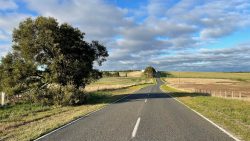
In recognition of the critical state of the region’s environment and the mounting pressures from population growth and land use change, the City of Greater Geelong launched its Environment Strategy 2020-30, containing five long-term strategic goals to be achieved by 2030. A key target of one of these goals was the preparation of a biodiversity strategy, with a vision to protect, enhance and restore the region’s biodiversity. The City of Greater Geelong appointed RMCG to lead the collaborative development of the biodiversity strategy, titled the ‘Plan for Nature’.
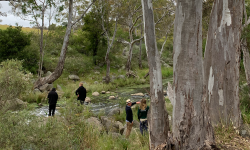
As environmental strategy experts, we understood the complexity and scale of developing a municipality-wide Plan for Nature. This work required not only strong technical analysis but also a deep understanding of ecological systems, policy frameworks, stakeholder priorities, and land-use pressures. We approached the task by engaging early with Wadawurrung Traditional Owners, collaborating with council to continually adapt and evolve the project design, analysing and using the best available scientific evidence, and involving local communities in setting local priorities.
Developing landscape zone reports
Our first step was to develop State of Nature Reports for six landscape zones we identified based on work by the Corangamite Catchment Management Authority and Melbourne Water. The purpose of these reports was to understand and document the current condition of biodiversity in each zone, establish strong baseline data for monitoring, and develop the tools and evidence-base to underpin priority management actions and long-term goals.
Traditional Owner engagement
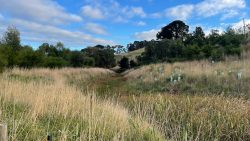
Early, proactive and meaningful engagement with Wadawurrung Traditional Owners and community stakeholders was key to developing the Plan for Nature. We held regular meetings with the Wadawurrung Traditional Owner Aboriginal Corporation and walked on Country with Traditional Owners, to understand and incorporate their knowledge, voices, interests and priorities into the plan in an appropriate way.
We held presentations and meetings with community-based environment groups and launched a wider community engagement campaign consisting of a website, surveys, public information stalls, presentations and a social media presence. This engagement campaign allowed us to better understand the community’s values for nature in the city, the perceived threats and the opportunities to protect nature.
Short and long-term actions
The final Plan for Nature is nearing completion and includes a comprehensive description of the region and drivers for change, a strategic direction, identification of flagship projects and icon species, an Action Plan with short-term actions for each landscape zone, and higher-level objectives and targets across the following five goals:
- Wadawurrung Country and values
- Protections
- Connections and restoration
- Community and partnerships
- Climate change.
We have also developed an accompanying monitoring and evaluation plan to enable continuous improvement, as collected learnings will inform future actions.
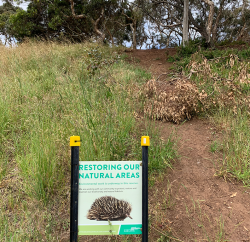
The Plan for Nature represents a significant step forward in protecting and enhancing biodiversity across the region. Grounding the strategy in the knowledge and priorities of Wadawurrung Traditional Owners, using the best available science, and listening to the community, has resulted in a living document that reflects both place-based values and strategic foresight.
As the City of Greater Geelong continues to grow, the Plan for Nature will play a vital role in guiding land management and conservation decisions. Importantly, the plan can form a foundation for ongoing progress, to ensure that nature is protected, restored and celebrated for generations to come.
[1] Wadawurrung Traditional Owners Aboriginal Corporation (2019) Paleert Tjaara Dja: Let’s make Country good together 2020-2030 Wadawurrung Country Plan. https://www.wadawurrung.org.au/_files/ugd/d96c4e_72611327c6a54d3198c0499ac5c26e54.pdf